The Sound of a Festive Gathering
At an Ibizan village celebration, music is not a show placed in front of a crowd. It is one part of a shared occasion, shaped by dancers, neighbors, pauses, and the space around them.
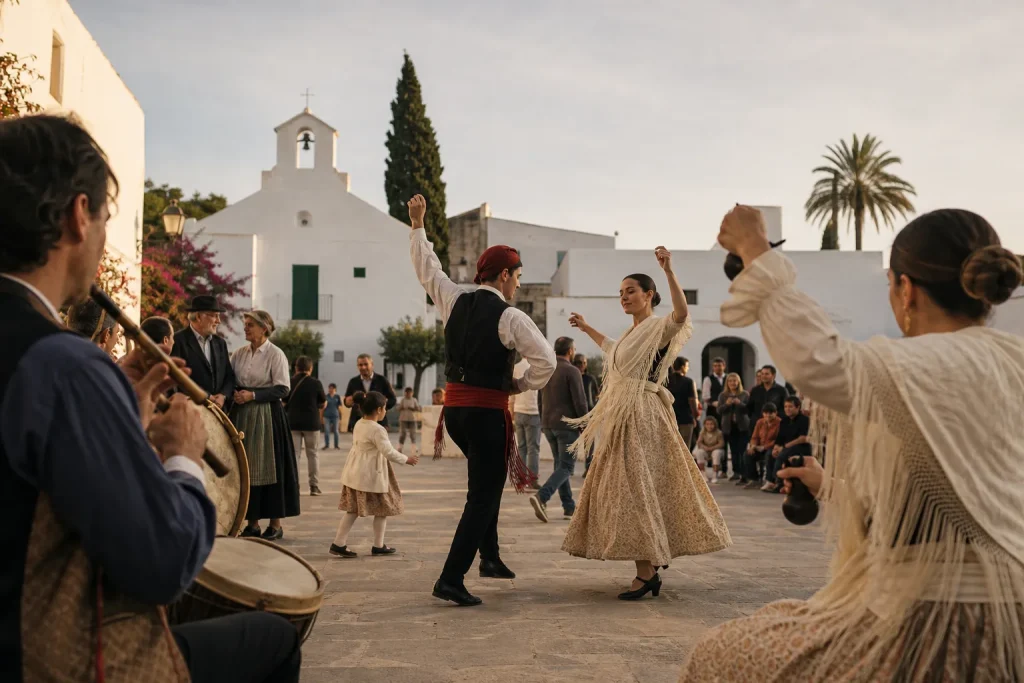
The common mistake at a village celebration is to treat the music as the main event and everyone else as its audience. That misses the exchange that gives the gathering its character: musicians set a pulse, dancers answer it, and neighbors decide when to join, watch, talk, or make room. The cost is a thinner understanding of the occasion—and, sometimes, a phone held aloft where a person might have been listening.
Who is the gathering for?
A local celebration may welcome visitors, but it does not begin as a performance arranged for them. It belongs first to the people marking a feast day, keeping a custom alive, or simply meeting in a familiar public place. The date and setting can matter as much as the program.
That distinction is visible in small things. A person greeting relatives across the square is not an interruption between acts. Children moving in and out of the dancing are not an unruly audience. Someone sitting quietly at the edge may be following the music closely, even without moving.
Visitors can take part without assuming they are owed an explanation or a front-row view. Watch how people position themselves, where the dancers leave space, and whether the event has an announced order or an informal flow. A little patience is a useful form of local knowledge.
What makes the sound communal?
Traditional music associated with Ibiza is often recognized through the ball pagès, the island’s traditional dance, and its accompanying instruments. The flaüta, a small flute, and the tambor, a drum, can create a spare, direct sound. The castanyoles, large castanets played by dancers, add a crisp rhythm that comes from within the dance rather than from a distant stage.
The instruments do not make a gathering communal by themselves. The sound becomes part of a shared event because people respond to it in different ways: a dancer follows a pattern, a musician adjusts the pace, a child imitates a step, and a cluster of neighbors keeps time with a nod. Listening is participation, though it is not the only kind.
There may also be contemporary music, announcements, conversation, or the soft disorder of people arriving late. These sounds do not necessarily compete with the older forms. A celebration is a social occasion, not a museum display with the background noise removed.
Listen for who sets the rhythm, and notice who is allowed to answer it.
How does dance shape the space?
In the ball pagès, a couple does not simply dance in the same way or occupy the same space. The man’s steps can be measured and grounded, while the woman’s movements trace turns around him, often with a poise that makes control look easy. That contrast is part of the form, not a general rule for how people at a celebration should behave.
The dance also changes the layout of the gathering. A circle of onlookers may form, but it is not quite a theater: people shift to let someone pass, lean in to see a detail, or step back when the dancers need room. The boundary between performers and observers can feel clear at one moment and porous at the next.
Imagine arriving at a village square as a dance begins. You pause behind a family rather than edging toward the center, then notice that the ring opens briefly for a latecomer carrying a tray. The visible result is simple: the dance continues, the path stays clear, and you can see without making your arrival the main event.
Stand where you can leave a path open; a good view is not worth blocking someone else’s evening.
When should a visitor join in?
There is no need to treat every dance as an invitation, and no need to treat every one as inaccessible. Look for cues from the people leading or organizing the gathering. If dancers are demonstrating a sequence, a musician is playing for a defined group, or the audience is held at a clear distance, observe. If people are invited forward or a communal dance begins, follow the local lead.
Joining should be modest. Ask before photographing someone at close range, especially children; keep clear of musicians and dancers; and do not mistake a costume or a traditional instrument for a prop supplied for visitor interaction. A polite question to an organizer may be more useful than guessing.
There is also a difference between participating and insisting on participation. A person can attend, listen, and learn the shape of a gathering without dancing. In a setting where people know one another, familiarity is often what makes an invitation possible. It cannot be manufactured by stepping into the middle of a circle.
What does the pause tell you?
Not every meaningful moment is loud. A pause between dances can hold greetings, practical instructions, or a quiet adjustment of instruments. The musicians may need a moment; a dancer may speak with a relative; someone may cross the square with no interest in the program at all. The gathering keeps going, even when the music stops.
That interval helps explain why a celebration should not be read only as a sequence of performances. The sound belongs to a larger pattern of meeting and recognition. People hear the music while also keeping track of who has arrived, who needs a seat, and where the evening is heading.
A visitor who stays through a pause may understand more than one who collects a brief recording and leaves. It is not a test of devotion. It is simply a chance to see how music sits among the ordinary obligations and pleasures of a shared night.
How can you listen without turning people into scenery?
Begin with the event itself: its name, the local group or association involved, and any guidance from organizers. If a program identifies a dance or instrument, use that information rather than assigning a sweeping meaning to every gesture. Traditions are specific, and the people who carry them are not obliged to perform an explanation on demand.
Photographs and recordings deserve restraint. Keep equipment low, avoid blocking sightlines, and ask before making someone the subject of a close image. A recording can preserve a sound, but it cannot capture the relationships that shape who plays, who dances, and who feels at home there.
It is also reasonable to leave room for your own uncertainty. You may not know why one tune draws a particular response, or why a dance pauses before it resumes. Not every gap in your knowledge needs to be filled immediately. Watch, listen, and ask a respectful question when there is a natural opening.
The most useful thing to carry away may be a distinction: a gathering can be welcoming without being arranged for you. Treating it as a living social occasion makes the music easier to hear—and leaves the square available to the people who came to share it.
Stay with the subject
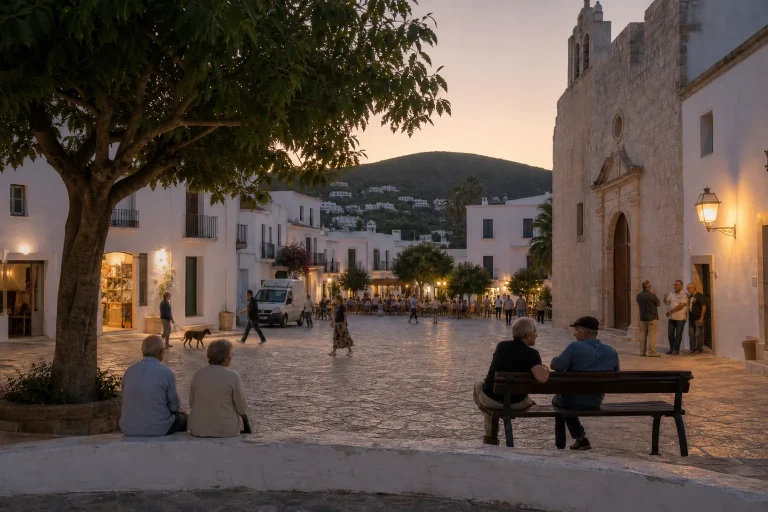
The Village Square After the Shops Close
On Ibiza, the village square shifts from practical thoroughfare to shared room as the day slows.…
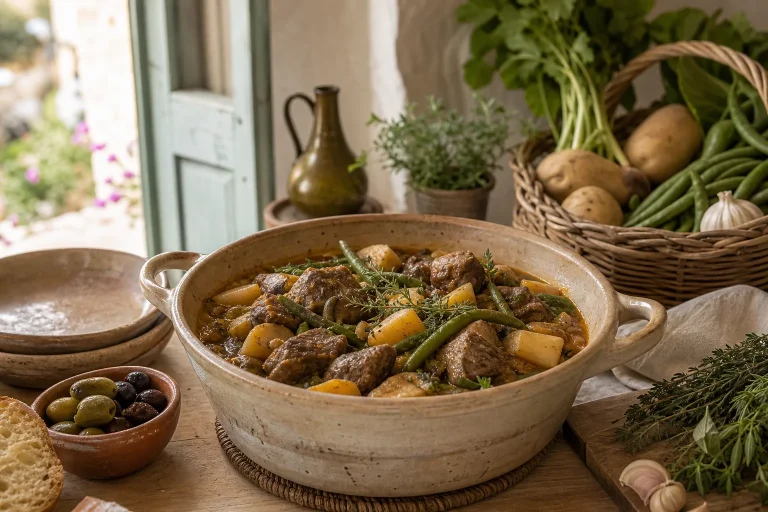
From Market Stall to Table: The Shape of an Ibizan Food Tradition
An imagined day of buying, preparing and sharing sofrit pagès shows how an Ibizan dish takes…